Last updated: August 10, 2026
Quick Answer: Cash envelope budgeting for teens usually works best with 3 to 6 envelopes. In cash envelope budgeting teens: how use it step by step, you assign money to simple categories, spend only from the right envelope, and review what runs out first.
Cash envelope budgeting teens: how use it step by step works best for a teen who spends money on a few repeat categories—snacks, clothes, school lunch, rides, games, or weekend outings—and wants a simple way to stop overspending. Card swipes and app transfers blur the trail; envelopes do not. I’m writing this as financial information, not financial advice; for your own situation, especially when income, taxes, or family rules are involved, a qualified adviser can help.
Key Facts / Key Takeaways
– 3–6 envelopes is a practical starting range for many teens.
– Cash works best for in-person spending like snacks, rides, and outings.
– A weekly review helps you spot the category that empties first.
– For spending that is mostly online, a hybrid system is often a better fit.
– For family rules, income questions, or safety concerns, consult a qualified adviser or another trusted professional.
If You Spend Too Fast, Start Here
When your money disappears before the week ends, the problem is usually not “bad discipline.” It is hidden spending. Card taps make totals feel smaller than they are. Cash envelopes change that fast. One envelope, one category. Empty means empty.
Should you get paid allowance, chores money, babysitting cash, or part-time wages, the basic setup is simple: decide where the money should go before you spend it. Yet if most of your spending is online, subscriptions, or digital-only, the standard envelope method is weaker, and you may need a hybrid system with some cash and some tracked digital categories.
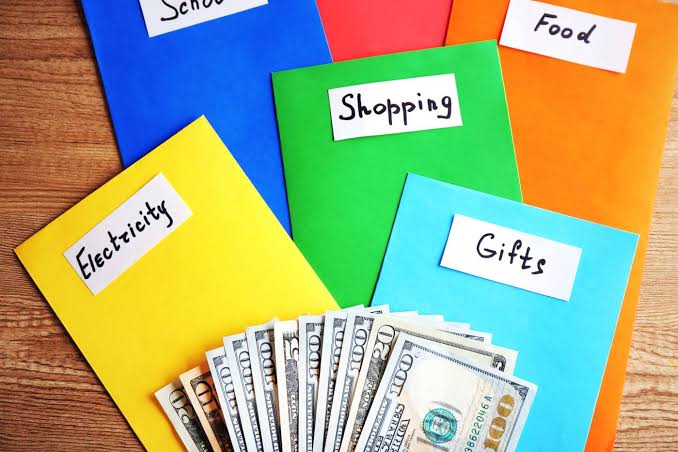
For a teen, the first step is usually choosing 3 to 6 categories. That keeps the setup visible without turning it into a chore. Here’s the step-by-step path I would use:
- Pick your spending categories. Keep it small at first: snacks, fun with friends, clothes, school supplies, transportation, and saving are common starting points.
- Choose a refill day. Use the day you get paid or a weekly day you can stick to.
- Count the cash you actually have. Start with real money, not what you hope to have later.
- Assign each bill to one envelope. Put the cash in labeled envelopes or a small cash wallet with compartments.
- Spend only from the correct envelope. If snacks are out, snacks are done.
- Review what emptied first. That tells you where your money leaks fastest.
Too many envelopes is the trap. Ten tiny piles? No thanks. The system gets fussy, then people quit. Another slip-up is treating envelopes as a substitute for saving. A “saving” envelope matters just as much as “fun,” even if the amount is small.
| Situation | Best Path | Why Other Options Fail |
|---|---|---|
| You overspend on small purchases | Use 3–6 envelopes and carry only the day’s spending cash | Card-only spending hides the total |
| You forget where money went | Write each withdrawal on the envelope or in a notes app | Memory gets fuzzy fast |
| You spend mostly online | Use a hybrid system with one cash category and tracked digital categories | Pure cash won’t fit online purchases |
| You have very uneven income | Refill envelopes only when money comes in, not on a fixed schedule | A fixed split can break when income shifts |
Quick check: if you can name your top 3 spending categories without guessing, you’re ready to set envelopes.
How to Set Up Envelopes Without Making It Complicated

Should you only get a small amount of money at a time, keep the setup bare-bones. A teen does not need a complicated budget app, color-coded spreadsheet, and twelve categories to start. Yet if you have several spending goals at once—say, lunch, clothes, and saving for a phone case—then a little structure helps.
I would start by separating money into three types: spending, saving, and occasional expenses. That third group matters because some costs are not weekly. A school trip, haircut, birthday gift, or sports fee can wreck a budget if you pretend it will never happen.
Try this setup:
- List every place your money goes. Write down the last month of spending if you can remember it.
- Circle the repeat purchases. Those are your envelope categories.
- Decide which costs are fixed and which are flexible. Fixed means the same-ish every time; flexible means it changes.
- Set aside a “maybe later” envelope. This is for irregular costs so they do not blow up your fun money.
- Label each envelope clearly. Use paper envelopes, a zip pouch, or a wallet with slots.
- Keep the cash in the same place. If envelopes are scattered in a backpack, they get lost, stolen, or spent impulsively.
Real tools that fit this method include plain envelopes, a small accordion file, a zippered cash wallet, or a budget notebook. A phone note can help you track totals, but the point is not the app; the point is visibility.
The trade-off is plain: cash is easy to see, but it is also easier to misplace than digital money. So you need a safe home for it and a habit for checking it. Should you not be able to keep cash secure, consider asking a parent, guardian, or qualified adviser to help you choose a safer setup. The Consumer Financial Protection Bureau has guidance on money habits and budgeting tools, and that kind of support can help when cash handling is a concern.
Quick check: if your money arrives in uneven bursts or you have irregular costs, you need a “maybe later” envelope, not just spending envelopes.
Which Envelope Split Makes Sense for Your Situation?
Should you live on a tight allowance, a small number of categories is often the easiest place to start, with one saving goal attached. Should you already have steady part-time income, you can use more detail, but not so much that the system becomes a chore. Yet if your parents already cover nearly everything, then envelopes should focus on discretionary spending and saving, not every single purchase.
Here’s a practical way to think about it: the right split is the one you can keep using after the novelty wears off. When your categories feel fake, too narrow, or too broad, the method stops working.
| Situation | Best Path | Why Other Options Fail |
|---|---|---|
| You get a small allowance | 3 envelopes: spending, saving, occasional expenses | Too many categories create tiny amounts that feel pointless |
| You earn babysitting or gig money | 4–6 envelopes with one category for irregular costs | No irregular-cost bucket means surprise expenses hit hard |
| Your parents pay most essentials | Use envelopes only for wants and personal goals | Budgeting every basic cost you do not control adds noise |
| You spend a lot on friends and outings | Separate “social” from “personal” spending | Mixing them makes it hard to see what is draining money |
If you need a starting point, I would often choose:
– Spending
– Saving
– Clothes or personal items
– Social/fun
– Irregular costs
That is enough for many teens. You can add detail later if the current setup is too broad.
The standard advice to “budget every dollar” sounds neat, but for a teen it can backfire when the categories are too fine. A budget should help you decide, not become a second job. When you are guessing where your money goes, simplify. When you are already in control and want more precision, add one category at a time.
Quick check: if you feel overwhelmed just looking at a budget, you probably need fewer envelopes, not more.
The Actual Step-by-Step Routine for Using the Envelopes
When you want the method to work, the routine matters more than the labels. The envelope system breaks when money enters the wrong envelope, gets borrowed casually, or is never reviewed. Yet if you build a repeatable routine, it becomes almost automatic.
Start with this process:
- Choose your refill moment. Do it on payday, allowance day, or one set day each week.
- Count every dollar or bill you have for envelopes. Do not assign money you already spent.
- Put money into envelopes by priority. Put saving in first if that matters to you.
- Write the starting amount on each envelope. That gives you a quick check later.
- Spend only from the matching envelope. No “I’ll pay it back later” borrowing unless you decide, in advance, that borrowing is part of the system.
- Track every withdrawal or spend. A pencil mark on the envelope is enough.
- At the end of the week, count what is left. Decide whether the amount was too high, too low, or about right.
When you run out early in one category, do not raid every other envelope right away. First ask: was that category underfunded, or did I overspend? When the answer is overspending, the fix is behavior or a tighter category. When the answer is underfunding, the fix is a bigger allocation next time and less money somewhere else.
For a teen, the easiest rule is this: when an envelope is empty, pause the spending decision. That pause is the whole point. It creates friction between impulse and purchase.
A common problem is “borrowing” from savings for every small want. That is not budgeting; it is moving the problem around. Should you borrow, treat it as a real decision, and record it so you see the pattern. When borrowing becomes a habit, a parent, guardian, or qualified adviser can help you check whether the system still makes sense.
Quick check: if you often tell yourself you’ll remember a purchase later, you need a stricter tracking habit.
When Cash Envelopes Work Best — and When They Don’t
When most of your spending is on small, in-person purchases, cash envelopes are strong. When your spending is heavily digital, the method can still help, but it will not be perfect. That is the part generic budgeting advice often skips.
Cash envelopes work best when:
– you spend at school, malls, cafes, or local stores
– you want a hard stop when money is gone
– you need to see exactly how much is left
– you are learning spending control for the first time
They work poorly when:
– you pay for subscriptions online
– your family pays you through apps or transfers
– you have many shared purchases
– you need to buy online quickly and often
When your life is half cash, half digital, use a hybrid system. Keep cash envelopes for categories that are easy to overspend in person, like snacks or outings. Track the digital categories separately in a notes app, spreadsheet, or budgeting app. The point is not to force every dollar into paper. The point is to create visible limits where your weakest habits live.
When you are a teen with parental rules around money, cash can also help with transparency. A parent can see the structure at a glance without digging through transaction histories. Yet if your family already monitors money closely, ask what they expect before you start. A system that conflicts with household rules creates friction fast.
The big limitation is that cash is not always convenient, and it is not ideal for every person. When you lose cash often or cannot keep it secure, it makes sense to be cautious. Safety and practicality matter more than the method’s clean look.
Quick check: if your biggest spending problem happens online, cash envelopes should be only part of the solution.
Edge Cases Where the Normal Advice Breaks Down
When one of these situations applies, the standard envelope setup needs adjustment.
-
You get paid irregularly.
What changes: a weekly split may not match your cash flow.
What to do instead: refill envelopes only when money arrives, and make saving a separate first stop. -
Your parents cover all needs except fun money.
What changes: budgeting every basic category adds confusion.
What to do instead: use envelopes only for discretionary spending and personal goals. -
You often spend with friends.
What changes: social pressure can empty an envelope fast.
What to do instead: create one clear social envelope and decide in advance what it is for. -
You lose track of physical cash.
What changes: the method’s main strength becomes a risk.
What to do instead: use a small wallet, one home location, and a written log; if that still fails, consider a digital tracking method. -
You have a goal with a deadline, like a concert ticket or a gift.
What changes: vague saving is not enough.
What to do instead: make one envelope for that single goal and keep it separate from general savings. -
You are tempted to use savings for every want.
What changes: your savings envelope is not functioning as savings.
What to do instead: label the savings envelope with the actual goal and a rule for when it can be touched.
The mistake here is pretending every teen situation fits the same template. It does not. A system should match your spending pattern, not someone else’s tidy example.
Quick check: if one life detail keeps breaking your budget plan, your issue is not self-control alone; it is the wrong setup.
How to Keep It Going Without Burning Out
When the envelopes work for two weeks and then you ignore them, the system is too hard or too vague. When you want it to last, make it boring. Boring is good here.
Use these habits:
– refill on the same day each cycle
– keep category names simple
– review spending once a week, not every hour
– adjust only one thing at a time
– celebrate the pause, not the purchase
I would also keep one rule in mind: the envelope system is a tool for decisions, not a test of character. Should you overspend, do not scrap everything. Look at the category, the timing, and the trigger. Maybe the amount was too low. Maybe the category was doing too much work. Maybe you need one extra envelope for weekends or school days.
Should you be a teen using cash envelopes for the first time, the win is not perfect math. The win is learning what your money actually does before it disappears. That skill carries over whether you later use cash, cards, or an app.
Quick check: if you want a system you can keep up for months, not days, simplify it until it feels almost boring.
Alternatives to Cash Envelope Budgeting for Teens
When cash envelopes do not fit your spending, a few alternatives can still give you limits. A debit-card budget with category totals works better for online purchases and subscriptions. A spreadsheet or notes app can track every purchase if you prefer digital records. A parent-managed account can also help when you want oversight, but it works best when everyone agrees on the rules.
For example, a teen who spends $40 a month on snacks and rides may do fine with cash envelopes, while a teen who spends $75 a month on app purchases may need digital tracking instead. The method matters less than the match between the tool and the spending pattern.
Quick check: if cash keeps getting in the way, switch to the simplest alternative you will actually use.